4th June 2025
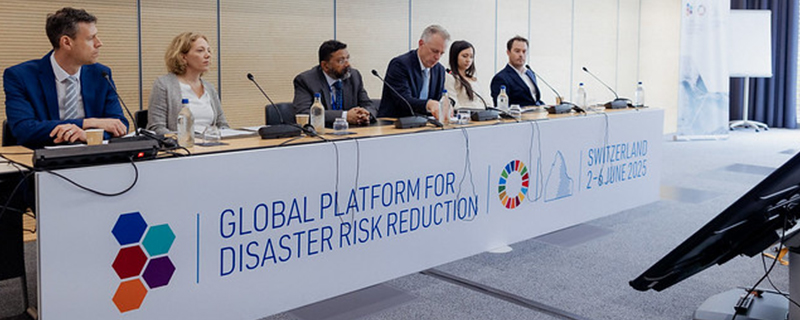
On 4 June 2025, a side event titled “GLOF Hazard Modelling and Risk Management in the Indian Himalayan Region and the Tien Shan Region” was held in Geneva, Switzerland. It was jointly organized by the Swiss Agency for Development and Cooperation (SDC), National Disaster Management Authority (NDMA), India and UNESCO Almaty Regional Office for Central Asia. The event took place during the eighth session of the Global Platform for Disaster Risk Reduction (GPDRR 2025), organized by the UN Office for Disaster Risk Reduction (UNDRR) and hosted by the Government of Switzerland.
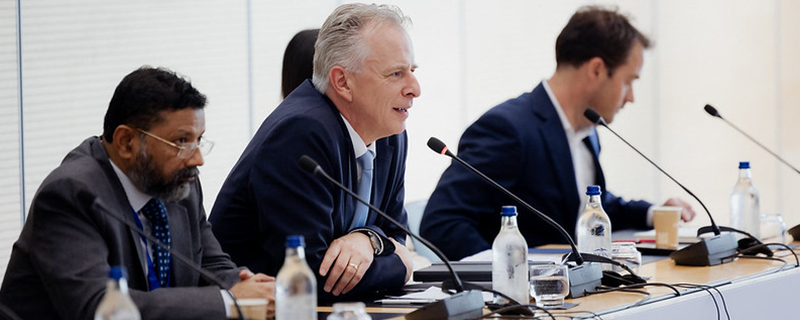
This side event brought together a distinguished panel of scientists, policymakers, disaster risk reduction (DRR) practitioners, and development cooperation experts to address the escalating threat of Glacial Lake Outburst Floods (GLOFs). The discussion showcased innovative approaches to hazard modelling, early warning systems, and integrated risk management, emphasizing the critical role of science-based assessments and community engagement. With around 50 participants, including key stakeholders from diverse sectors, the session underscored the urgency of tackling GLOF risks in high mountain regions.Speaking during the event Dr. Krishna S. Vatsa, Member, National Disaster Management Authority (NDMA), Government of India, emphasized the importance of collaborative approaches to enhance resilience in the Indian Himalayan Region and acknowledgedthe support ofthe Swiss Agency for Development and Cooperation (SDC).
Mr. Christoph Haemmig, Team Leader, GEOTEST, highlighted the challenges of implementing hazard monitoring and early warning systems in remote mountain regions, drawing on lessons from Indo-Swiss cooperation in Sikkim.
Dr. Simon Allen, from the University of Geneva and the University of Zurich, emphasized the importance of data sharing and regional collaboration. He cited examples from Central Asia to highlight significance ofinternational partnerships as key to advancing technical solutions for GLOF risk management. Ms. Natalia Kim, National Professional Officer, UNESCO Regional Office in Almaty, spoke about enhancing community-level interventions for real-time GLOF monitoring and response.
Ms. Mirjam Macchi Howell, Head of Section, Climate, DRR and Environment, SDC, discussed challenges in scaling GLOF risk management and emphasized the importance of regional scientific cooperation.
The event provided a global platform where India and Switzerland jointly showcased their enduring partnership in disaster risk governance. It highlighted key achievements from the Indo-Swiss collaboration on GLOF risk management in Sikkim, carried out under the SCA-Himalayas project. The event aligned with the Geneva Call for Disaster Risk Reduction, reflecting a shared commitment to science-driven, regionally anchored resilience. The event also included streaming of a movie 5-minute film which offers a behind-the-scenes look at how Swiss expertise has supported the NDRF’s journey in India toward international shared Search and Rescue Advisory Group (INSARAG) standards, enhancing urban search and rescue (USAR) capacity and advancing South–South cooperation in disaster preparedness.
Global partnerships and platforms like GPDRR play a vital role in scaling up policy-relevant, science-driven solutions.